
Coleo guide
Summer Camp Budget Planner: Weekly Costs, Deposits, and Shared Extras
Calculate a two-child camp budget by week, separate deposits from additional fees, and plan payment dates around the actual local school break.
Plan camp by child and actual attendance week, then build a separate payment timeline. Add registration, transport, supplies, and other confirmed extras. Check whether the deposit is part of tuition before adding it to the total. Use your local school-break dates and currency, not a universal summer schedule.
- Compare the same number of days and coverage hours.
- Count shared transport once across the family.
- Treat unconfirmed discounts and refunds as unresolved, not money available.
A camp decision involves timing as well as total price. The CFPB cash-flow tool is relevant to when commitments need funding; it does not endorse any camp or budget level. The worked figures below are fictitious USD amounts, not market prices or a statement of affordability.
Check the attendance week before the price comparison
Record the real camp dates, arrival and collection hours, included meals, transport, and any extended-day charge. Two camps with the same weekly headline fee may cover different days or hours. Keep provider requirements, eligibility, and any unanswered supervision questions separate from the financial comparison.
Ask whether registration is additional, how deposits are applied, and when the remaining fee is due. Read cancellation and refund terms for the actual booking. Do not count a possible sibling discount until the provider confirms eligibility and the amount on the booking.
Example: two children across two local camp weeks
Maya and Leo attend two fictitious camp weeks during their local school break. Tuition includes the program's stated daily hours. Shared transport serves both children. No discount or refund is assumed.
A USD 50 deposit per child is part of the USD 760 combined tuition. Paying USD 100 in deposits leaves USD 660 tuition due later. It does not turn the USD 900 total into USD 1,000.
| Child or shared item | Week 1 | Week 2 | One-time | Total |
|---|---|---|---|---|
| Maya tuition | 200 | 200 | 0 | 400 |
| Leo tuition | 180 | 180 | 0 | 360 |
| Shared transport | 40 | 40 | 0 | 80 |
| Registration: USD 15 each | 0 | 0 | 30 | 30 |
| Supplies: Maya 20, Leo 10 | 0 | 0 | 30 | 30 |
| Family total | 420 | 420 | 60 | 900 |
Turn the total into a payment timeline
Under this invented booking schedule, USD 130 is due at booking: USD 100 tuition deposits and USD 30 registration. Before camp, the family pays the USD 660 remaining tuition and USD 30 supplies. Transport costs USD 40 in each attendance week. The sequence reconciles: 130 + 690 + 40 + 40 = USD 900.
Replace those relative milestones with the provider's actual deadlines. If a camp week is canceled, preserve the original payment and track the provider's response separately. A credit for a later week and a cash refund are different outcomes. Check coverage and collection arrangements again if dates move.
Inside the app
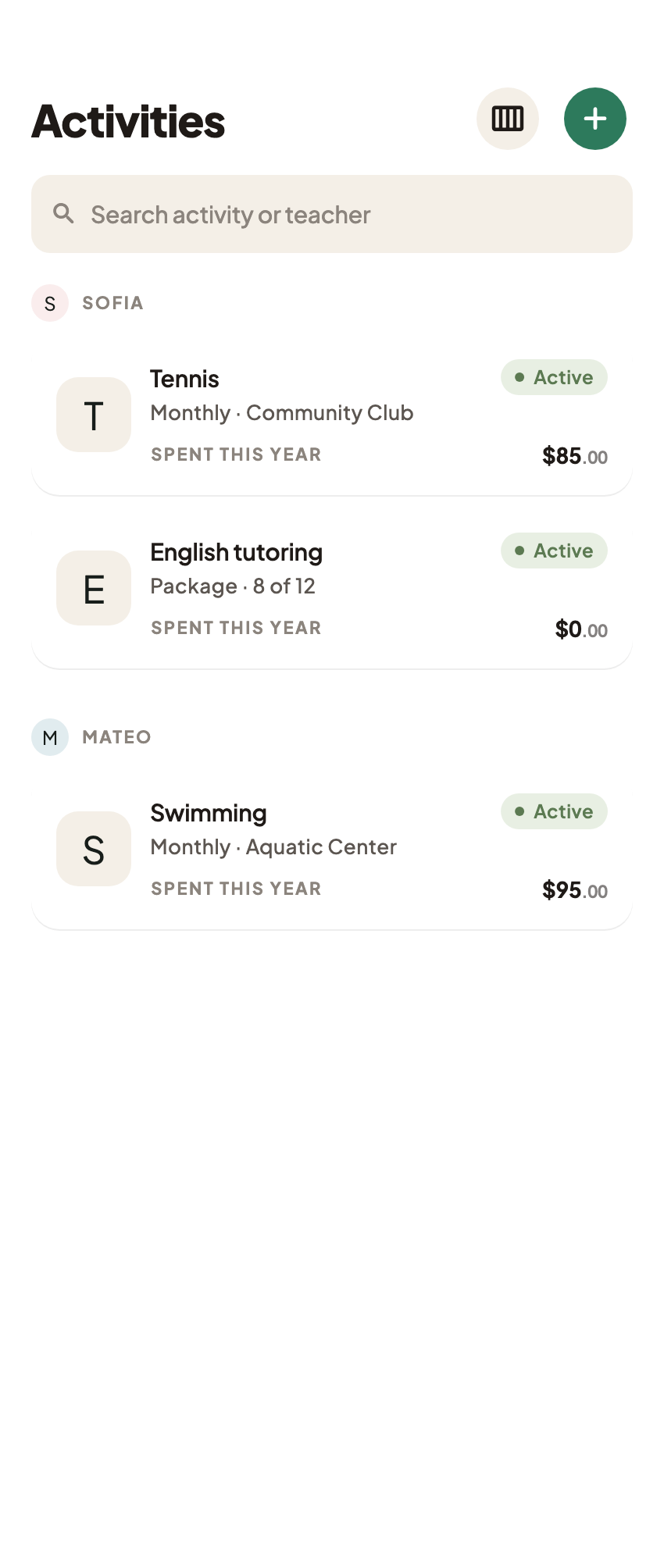
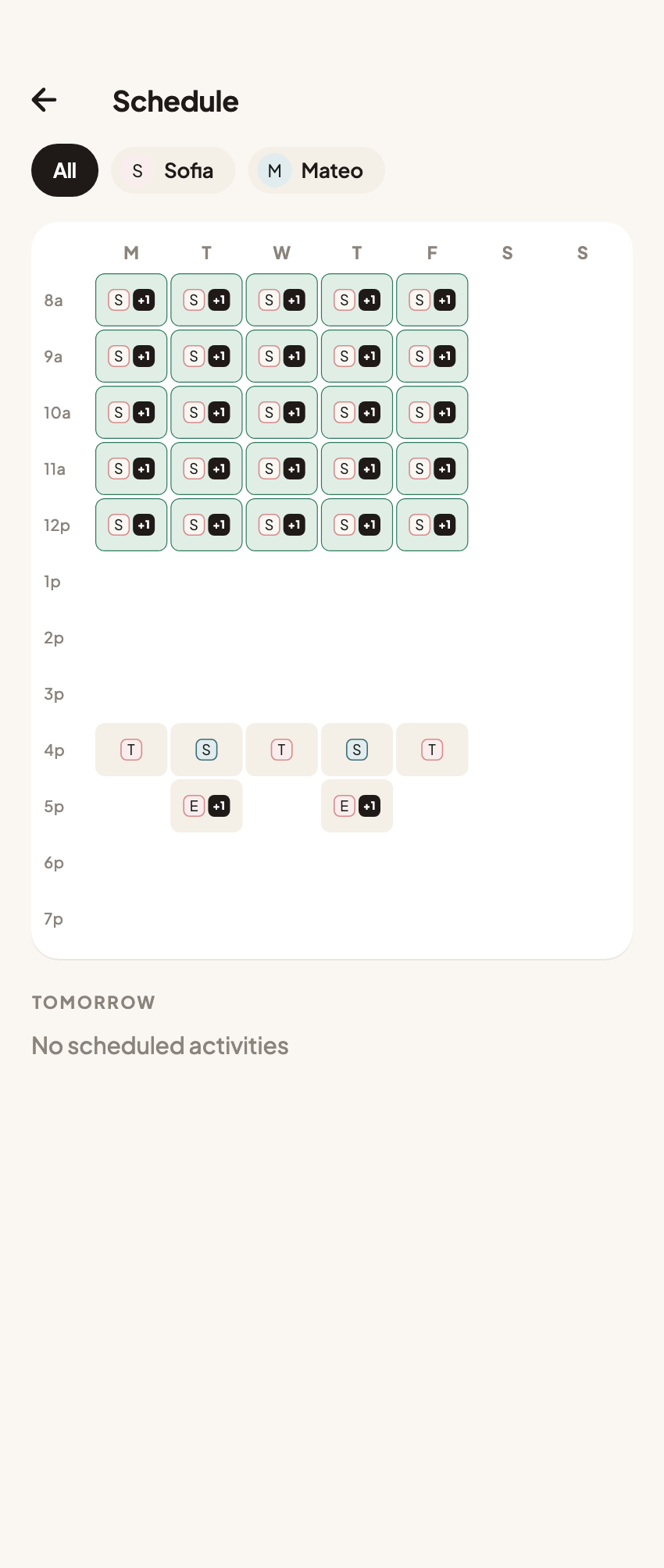
Coleo can hold the child's camp activity, provider, schedule, and actual expenses. The multiweek budget, deposit allocation, and shared transport table are editorial planning tools, not a verified camp-comparison or booking module. Keep estimates out of completed-payment totals.
Free download with optional in-app purchases. See your store for current prices, subscriptions and terms.
A complete camp plan explains who attends which week, what the booking really includes, and when each payment happens. Confirm the dates and terms locally before treating any number as final.
FAQ
Common questions
Check the provider's terms. In the fictitious example it is part of tuition, so the deposit reduces the later balance rather than increasing the total cost.
Use the actual local school break and camp dates. The example uses relative weeks, not a universal summer month or holiday calendar.
No. Coleo can organize family activity and expense records. Booking, suitability, supervision, terms, refunds, and confirmation remain with the camp provider and family.
