
Peptiva guide
Retatrutide Log: Records for Clinical-Trial Participants Only
US status checked September 5, 2026: retatrutide is not FDA approved. A trial-participant note example covers questions and reporting, not medication use.
Educational only. Not medical advice.
As of September 5, 2026, retatrutide is not FDA approved in the United States. The FDA also states that it cannot be used in compounding under federal law. This guide is only about supplemental recordkeeping for people already enrolled in a clinical trial, using the study team's reporting process.
- Keep the required study diary and reporting contacts authoritative.
- Ask the study team whether a supplemental personal log is permitted.
- Do not use this article or an app for procurement, dosing, preparation or reconstitution.
A US regulatory statement is not a determination of status in every country. Check the appropriate regulator for your location. Neither research interest, a trial listing nor a clinician's involvement establishes general approved access. A name appearing in tracking software says nothing about the authenticity or suitability of a product.
Establish the recordkeeping boundary with the study team
For an enrolled participant, start with the contact details and reporting instructions supplied by the study. Ask which diary must be used, what belongs in it and what to do when an entry is late or uncertain. FDA informed-consent materials address contacts for research questions and research-related injury; a personal tracker is not that contact pathway.
Keep private identifiers and study documents out of an additional app unless the team has confirmed that this is appropriate. If the team requires a specific electronic diary, use that system. Do not quietly substitute an app because it is more familiar or easier to open.
Separate an observation, a report and an unanswered question
A supplemental note can help you remember that a conversation occurred without copying a protocol or creating medication instructions. Use separate lines for what you observed, when you reported it and what remains unresolved. Record approximate times as approximate. Report concerns through the study's actual channels, not by saving a note and assuming someone can see it.
The example below is a communication record for an imaginary enrolled participant. It deliberately contains no medication event, dose, preparation detail or treatment response assessment.
| Date | Personal note | Recordkeeping follow-up |
|---|---|---|
| September 1 | Asked whether a second diary is permitted | Await study team's answer before entering study health data elsewhere |
| September 2 | Headache noticed about 3 pm; time estimated | Reported through study channel; preserve the original observation |
| September 3 | Unsure whether yesterday's diary submission completed | Ask coordinator to confirm receipt; do not invent a submission time |
| September 4 | Next visit questions prepared | Ask how to correct a late entry and which contact is available after hours |
Do not use observations to infer assignment or efficacy
Hunger, symptoms and weight notes cannot establish whether you received an investigational medicine, what caused a change or whether it is effective. Do not use a personal chart to infer a study assignment or alter a protocol. Record questions for the study team instead of testing a theory yourself.
Follow the study's safety-reporting instructions and seek emergency help for an emergency without waiting to complete either diary. This article offers no route to obtain retatrutide and no advice for using products sold outside a trial. Recheck the dated regulatory source before reusing this material in another country or at a later date.
Inside the app
Peptiva is personal tracking software, not a trial platform or a source of regulatory authorization. Only consider a supplemental log if your study team permits it. It does not replace study records, transmit safety reports to the team or verify a product.
Free download with optional in-app purchases. See your store for current prices, subscriptions and terms.
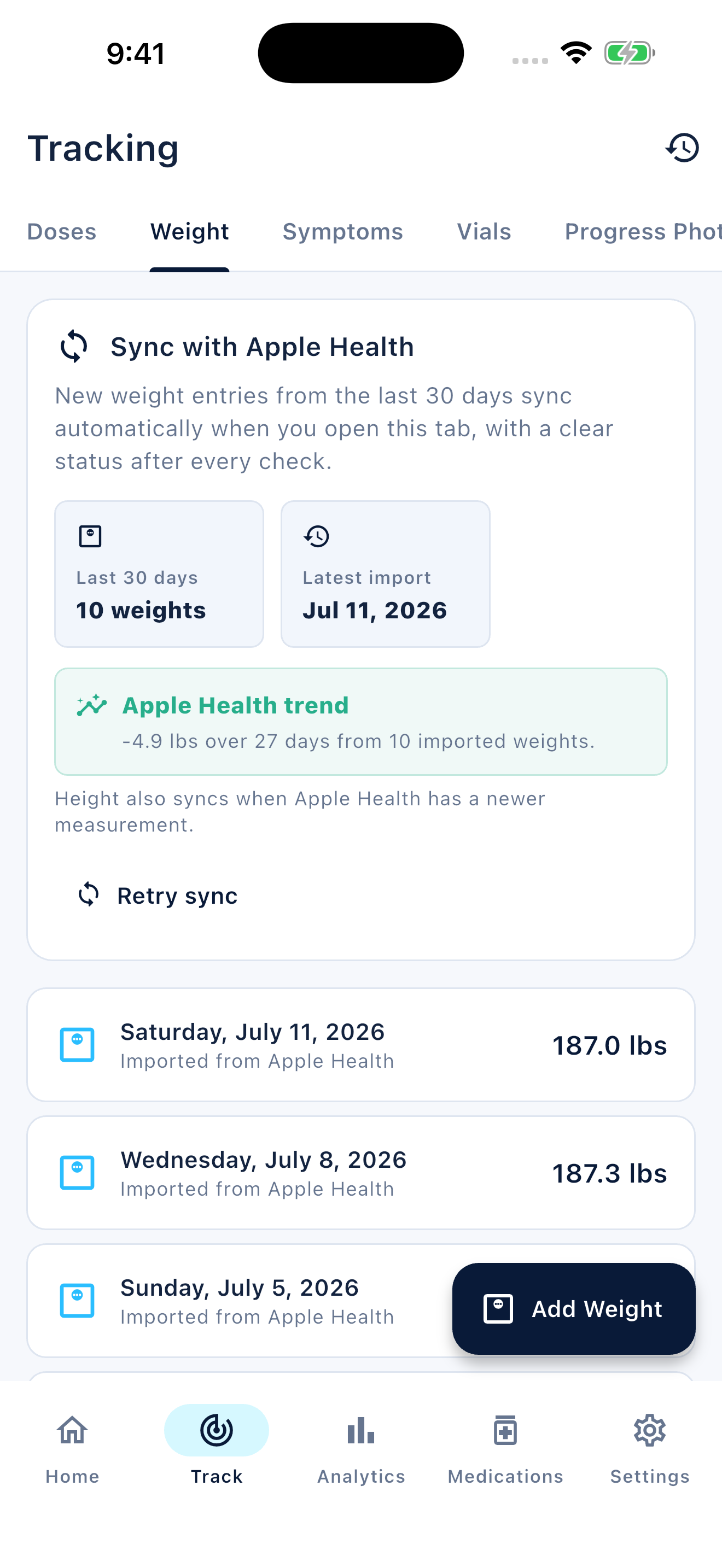
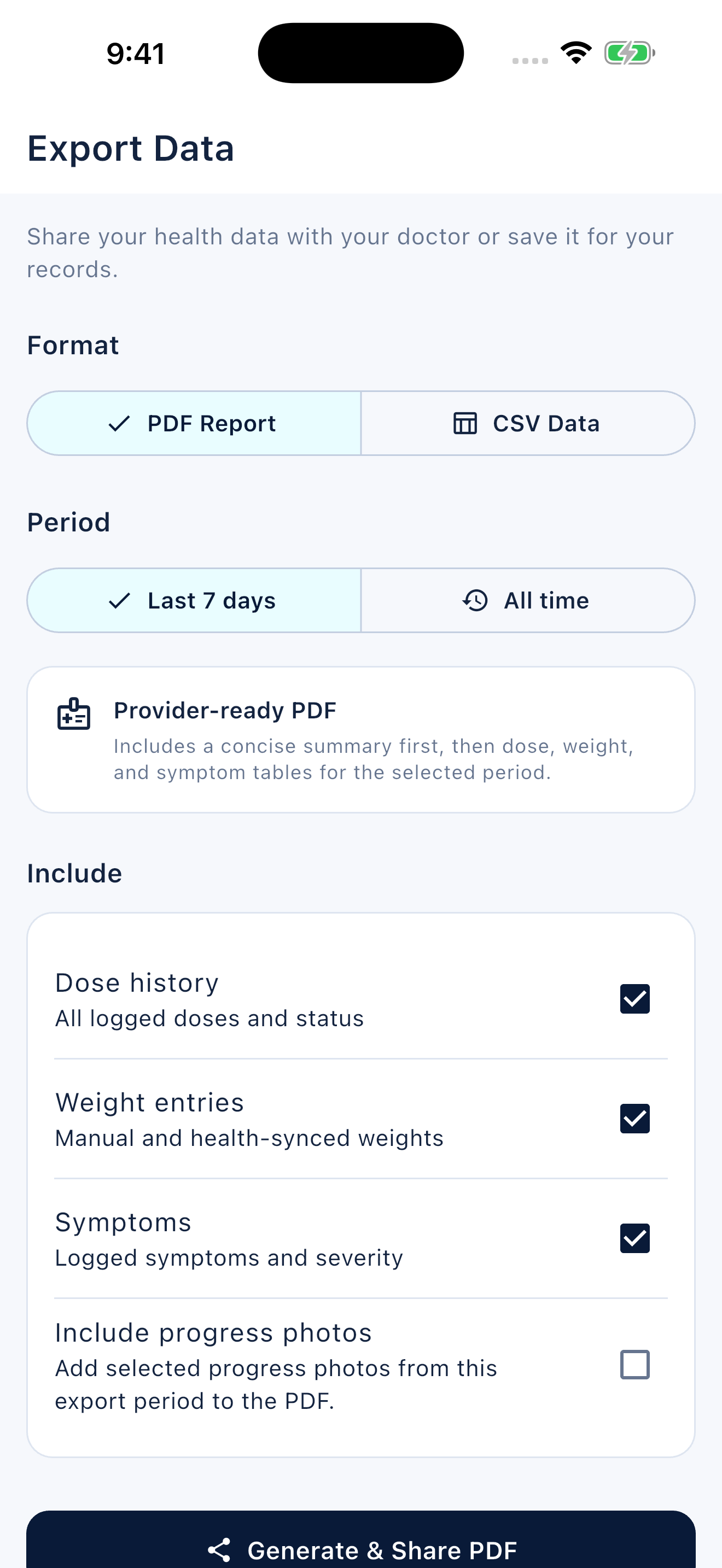
For an enrolled participant, the useful record is the one the study team can receive through its required process. An app cannot turn an unapproved product into approved care.
FAQ
Common questions
No. As of September 5, 2026, retatrutide is not FDA approved in the United States. The linked FDA page also states that it cannot be used in compounding under federal law. This is a US-specific statement.
No. A medication name in a tracker does not establish approval, authenticity, eligibility or lawful access. This article does not support procurement or medication use.
No. Enrolled participants should follow their study team's required diary and safety-reporting process. Ask the team before keeping any supplemental health data in another app.
