
Peptiva guide
GLP-1 Symptom Log: What to Record and When Not to Wait
Build a descriptive symptom timeline with onset, duration, daily impact and contact notes, plus a fictitious example and product-specific safety sources.
Educational only. Not medical advice.
Record what you noticed, when it began, how long it lasted, how it affected your day and whether you contacted your care team. Keep the description separate from a theory about its cause. If something may be urgent, getting help comes before completing a symptom log.
- Use your own words for the symptom.
- Separate the symptom time from the time you wrote the entry.
- Record contact attempts and responses without treating them as a diagnosis.
This is a personal recordkeeping method, not a test for side effects or treatment effectiveness. A quiet log does not prove that treatment is safe or working. A symptom-filled log does not establish why symptoms occurred. You do not need a complete week of data to raise a concern.
Capture one episode without reconstructing the whole day
Start with the episode you can describe. Include onset, approximate end or ongoing status, and an ordinary activity it interrupted. Words such as mild or a numerical rating can help you remember your experience, but neither is a clinical triage tool. Add relevant context without guessing a trigger.
If you add the medication context, copy the exact product name from your prescription and identify the last confirmed recorded event. Put duration or contact details in a note when your chosen tracker has no dedicated field. An empty field means unknown or unrecorded, not automatically absent.
| Field | Example entry |
|---|---|
| Observation | Felt nauseated; paused a work call |
| Onset and duration | September 2, about 6 pm; eased around 7:30 pm |
| Entry written | September 2, 8 pm; onset time estimated |
| Medication context | Exact prescribed product recorded separately; last confirmed event September 1 |
| Other context | Lunch later than usual; no conclusion about cause |
| Follow-up | Called clinic September 2; response and instructions kept separately |
Know what belongs outside the log
The Wegovy Medication Guide on DailyMed identifies severe, persistent abdominal pain as requiring immediate medical contact and lists serious allergic-reaction warnings. Those are examples from a specific product, not a complete warning list for every GLP-1 medicine. Read the guide supplied with your own product.
Use local emergency services for an emergency, including serious breathing difficulty. Do not wait for a rating, an app alert or another entry to decide whether to seek help. Do not use symptom timing to change medication use; direct medication questions to your clinician or pharmacist.
Bring episodes and questions to the conversation
Before a nonurgent appointment, select the relevant dates and write a neutral opening: I recorded nausea on two evenings and want to discuss it. Keep the individual episodes available so a summary does not hide duration or impact. Distinguish repeated episodes from multiple updates about the same episode.
Ask which details your care team wants next time and how to contact them between appointments. If you receive instructions, preserve who provided them and when. Do not convert fewer entries into a claim that symptoms improved unless your notes actually describe that change.
Inside the app
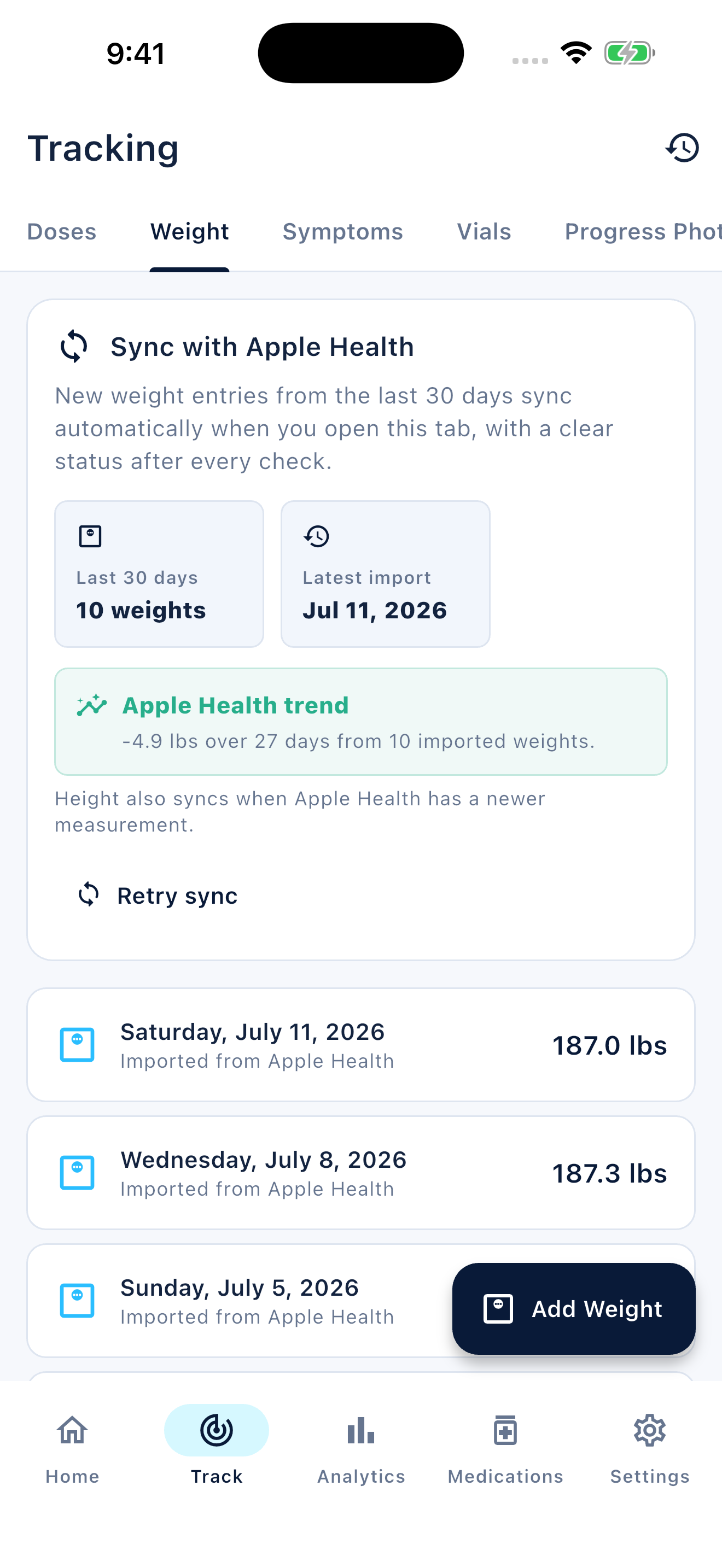
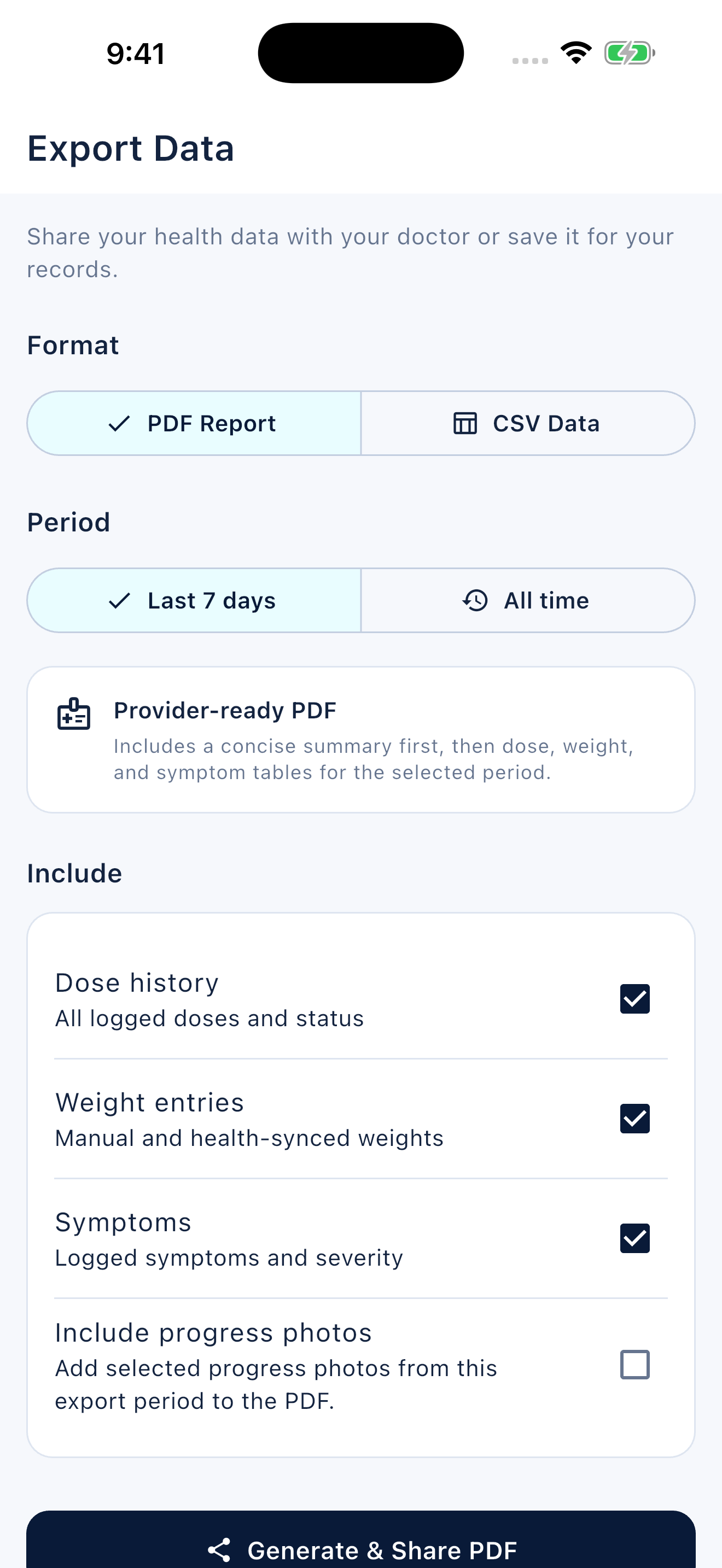
Peptiva provides symptom entries and notes alongside injection and weight records. Use notes for details such as duration and contact history. It does not replace clinical assessment or automatically notify your clinician when you save an entry.
Free download with optional in-app purchases. See your store for current prices, subscriptions and terms.
A useful symptom record is specific, honest about uncertainty and available when needed. Seeking care never depends on finishing the record.
FAQ
Common questions
No. Timing is an observation, not proof of cause. Preserve the entry and let a qualified healthcare professional assess it alongside your history.
No. Seek appropriate help first. A tracker must not delay care, and a personal severity score cannot tell you that waiting is safe.
Write an estimate such as about 6 pm and identify it as approximate. Do not replace uncertainty with an invented timestamp.
