
Payooo guide
How to Pay Off Debt Faster Without Building a Fragile Plan
Build a debt payoff plan from current statements, essential costs and affordable extra payments, with a worked budget example and clear limits.
Payooo is for planning and tracking. It is not financial advice.
To pay debt faster, first find an extra amount that your actual cash flow can support. Keep current account details, choose a deliberate target, and confirm how the creditor applies payments. A large payment is not useful if it forces you to borrow again for an already foreseeable expense.
- Use statement figures, not last month's projection.
- Account for essentials and upcoming required payments.
- Choose one destination for genuinely available extra money.
- Check what posted before updating your baseline.
This guide connects the whole process. The strategy comparison covers payment order in detail; the calendar guide handles timing. Here the decision is how to move from an ambitious goal to an amount you can actually send. Examples are educational, not a recommended household budget.
Start with a complete account inventory
Use one row per account and record its current balance, APR, required payment, due date and statement date. Add relevant promotional deadlines or loan payment instructions. The CFPB debt log is a useful starting structure for identifying what you owe.
Resolve missing or conflicting figures before comparing plans. A promotional rate on one balance may not apply to the whole card. Avoid choosing a payment order from account names or an old estimate alone.
Example: find room without spending the buffer
In this fictitious USD example, Alex has received $2,600 this month. Essential costs include housing, food, transport and utilities. The $250 reserve is Alex's own planning choice, not a universal emergency-fund target.
- Check that the $300 is available before each due date, not merely by month-end.
- If an additional $150 essential repair appears, the extra falls to $50.
- Keep the reserve separate so it is not counted as available twice.
| Allocation | USD | Purpose |
|---|---|---|
| Received income | 2,600 | Starting cash for this example |
| Essential costs | 1,850 | Reserved before optional payments |
| Required debt payments | 300 | All current bills in this example |
| Protected reserve | 250 | Not assigned to debt |
| Available extra | 200 | 2,600 - 1,850 - 300 - 250 |
Send extra money with an explicit purpose
Once the current obligations fit, Alex can compare a smallest-balance target with a highest-rate target using the same extra amount. Neither order overrides promotional terms, payment allocation rules or an urgent obligation.
For an installment loan, ask whether additional money reduces principal, advances a due date or attracts a charge. For a card with multiple balance categories, check the issuer's allocation rules. A favorable estimate does not authorize or execute a payment.
Build a response for a difficult month
If required payments no longer fit alongside essentials, stop treating the problem as an extra-payment optimization exercise. The CFPB recommends contacting a credit-card issuer immediately when you cannot pay. Explain the shortfall and ask about options; help is not guaranteed.
After each statement, replace estimates with verified figures and note why the extra changed. Do not force next month's budget to recover an optional payment that never happened. A later projected finish is information, not a verdict.
Inside the app
Payooo can organize manually entered debts, payment history and payoff scenarios without bank linking. Use it after collecting the facts and choosing a feasible budget. It does not send money, negotiate terms or provide individualized financial advice.
Free download with optional in-app purchases. See your store for current prices, subscriptions and terms.
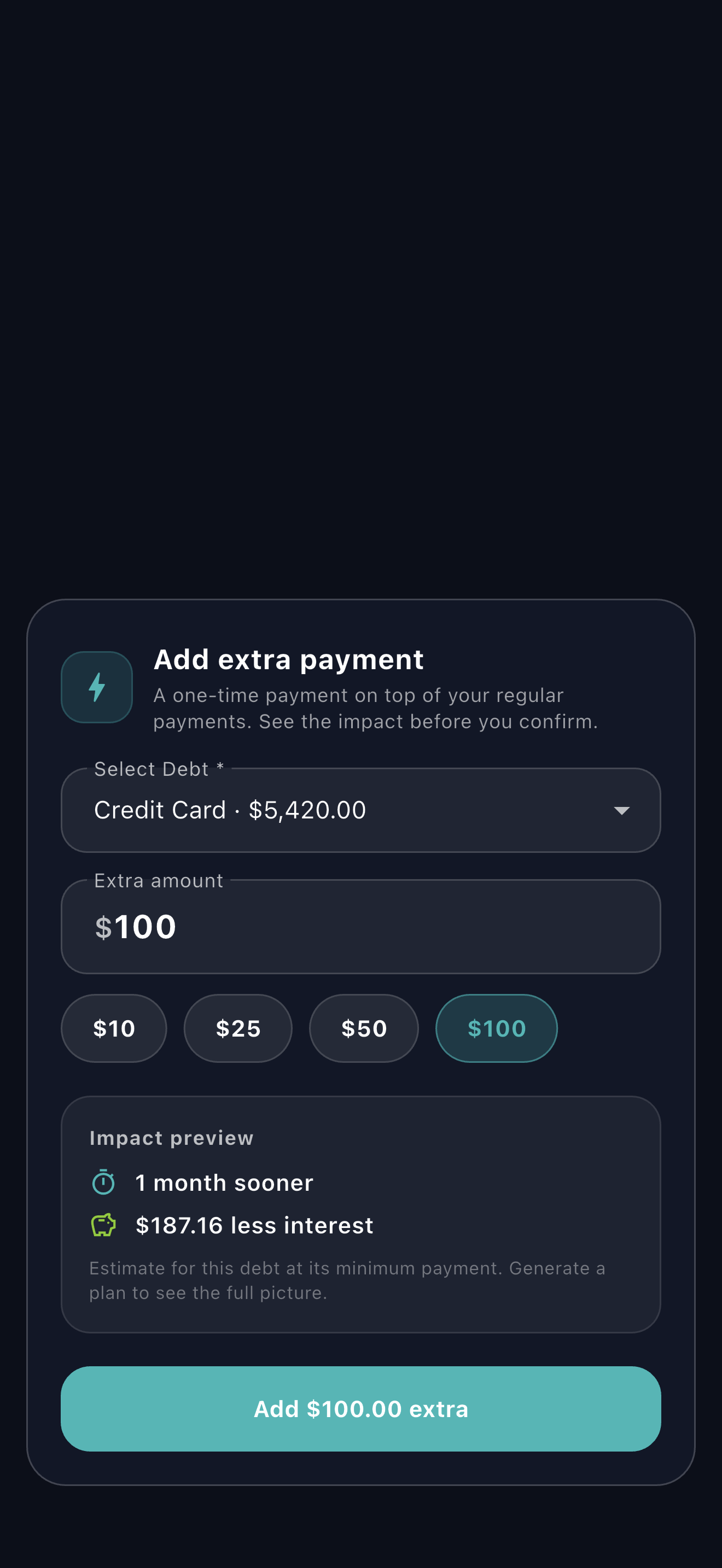
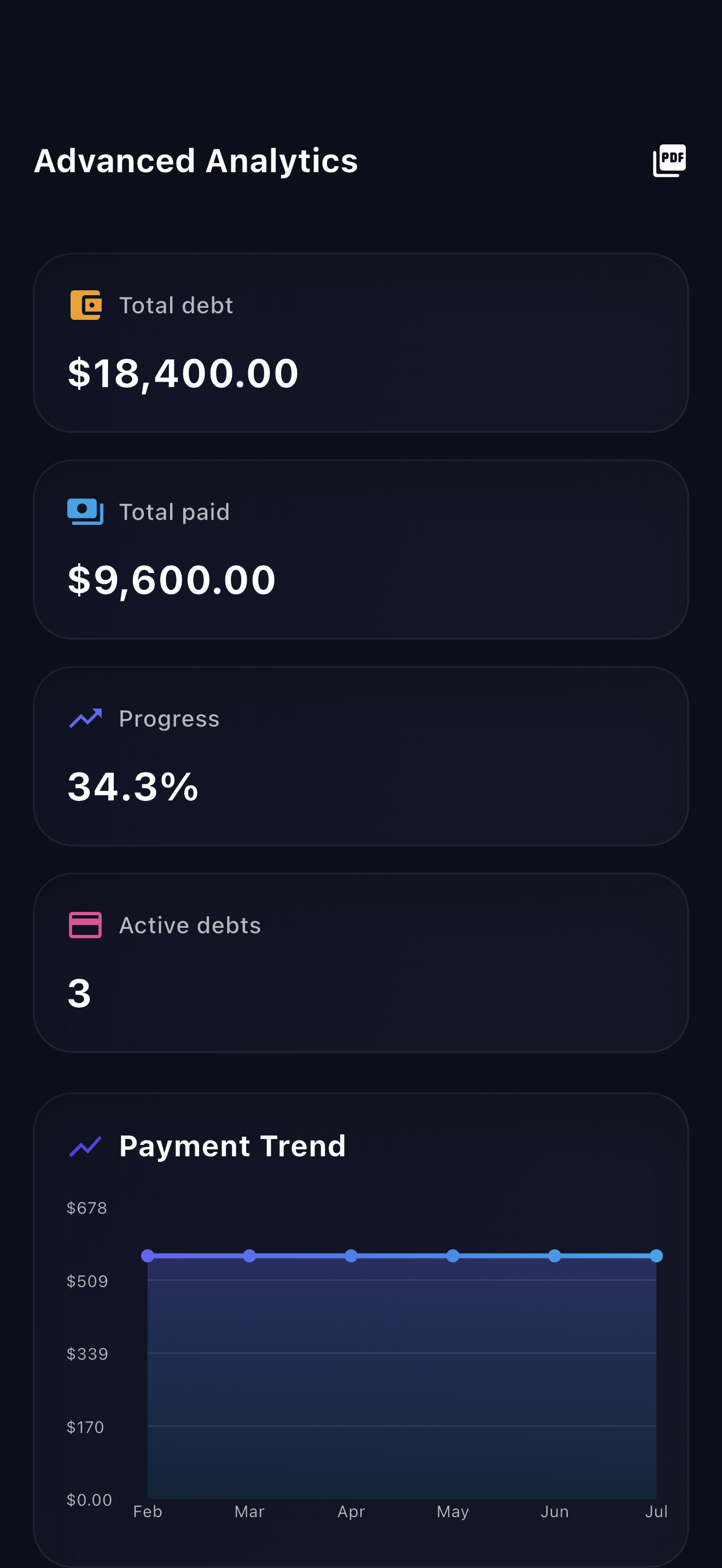
The practical next step is one checked amount, one target and one date. Keep the plan adjustable, and verify the result with the creditor rather than treating a projection as proof.
FAQ
Common questions
Gather current statements and list balances, rates, required payments and due dates. Then check essential costs and available cash before choosing a target for extra payments.
No. Extra payments are adjustable. A minimum payment can still reduce principal, depending on interest, fees and account activity. An unaffordable extra payment can create a new shortfall.
Contact the issuer promptly with the amount you can afford and the reason for the shortfall. Ask about available arrangements and their costs. A planner cannot change the payment agreement.
