
Peptiva guide
GLP-1 Weight Plateau Notes: Prepare Questions, Not a Diagnosis
Document a concerning weight pattern with dated readings, measurement context and specific appointment questions, without defining a plateau or changing treatment.
Educational only. Not medical advice.
If a weight pattern concerns you, write down the timeframe, the readings and the question you want answered. Do not label a plateau from an arbitrary number of days or treat a chart as evidence that medication has stopped working. This guide prepares a conversation; it does not diagnose the pattern.
- Name the exact period that prompted your concern.
- Keep measurement differences attached to the readings.
- Separate the chart description from questions about treatment.
This is different from a weekly measurement routine. The focus here is deciding what evidence and questions to bring to a consultation. NHS England's recording guidance recommends consistent scales and measurement conditions. That helps document comparability; it does not define a medically meaningful plateau or explain a particular person's weight pattern.
Replace the label with a bounded observation
Instead of writing stalled, identify which readings you mean. Include the unit, start date, end date and any change of scale or routine. Preserve the original values. Do not add missing readings, shorten the date range to make a trend look stronger or apply a smoothing line as if it were a clinical conclusion.
The fictitious series below is deliberately similar across several dates. It supports a question about interpretation, not a diagnosis. A graph made from these values would need visible dates and units; the different-scale point would still require its note.
| Date | Weight | Recorded conditions |
|---|---|---|
| August 3 | 84.2 kg | Home scale; morning |
| August 10 | 84.1 kg | Home scale; morning |
| August 17 | 84.3 kg | Hotel scale; evening |
| August 24 | 84.2 kg | Home scale; morning |
| August 31 | 84.1 kg | Home scale; morning |
Turn the concern into answerable questions
For this example, a useful opening is: My home readings were between 84.1 and 84.2 kg on these dates, and I also have one hotel reading. How should we interpret this period in relation to the reason I am receiving treatment? That wording leaves room for the clinician's assessment without dismissing the concern.
Ask what information would help next, what follow-up is appropriate and which concerns should prompt contact sooner. Keep any hunger or symptom notes as separate observations. Neither more hunger nor fewer symptoms is a personal test of medication strength, absorption or effectiveness.
- Which timeframe would you like us to review?
- Does the different-scale reading need separate consideration?
- What should I record before our next conversation?
Keep actions and explanations in separate columns
A recordkeeping action might be to label the hotel measurement or locate a missing note. A medical decision belongs with your care team. Do not respond to the chart by changing medication, adding an extra event, imposing a new eating restriction or treating an app projection as a target you must meet.
You can bring up a concern before a scheduled review; there is no requirement to wait for a certain number of similar readings. If tracking itself is becoming distressing, say that too and ask what recording approach is appropriate. The useful outcome is a clarified question, not reassurance that the pattern is automatically normal.
Inside the app
Peptiva can display recorded weight trends alongside other personal tracking information. Its charts organize values; they do not determine why a pattern occurred. Keep contextual notes and the clinician's questions available separately from any visual trend.
Free download with optional in-app purchases. See your store for current prices, subscriptions and terms.
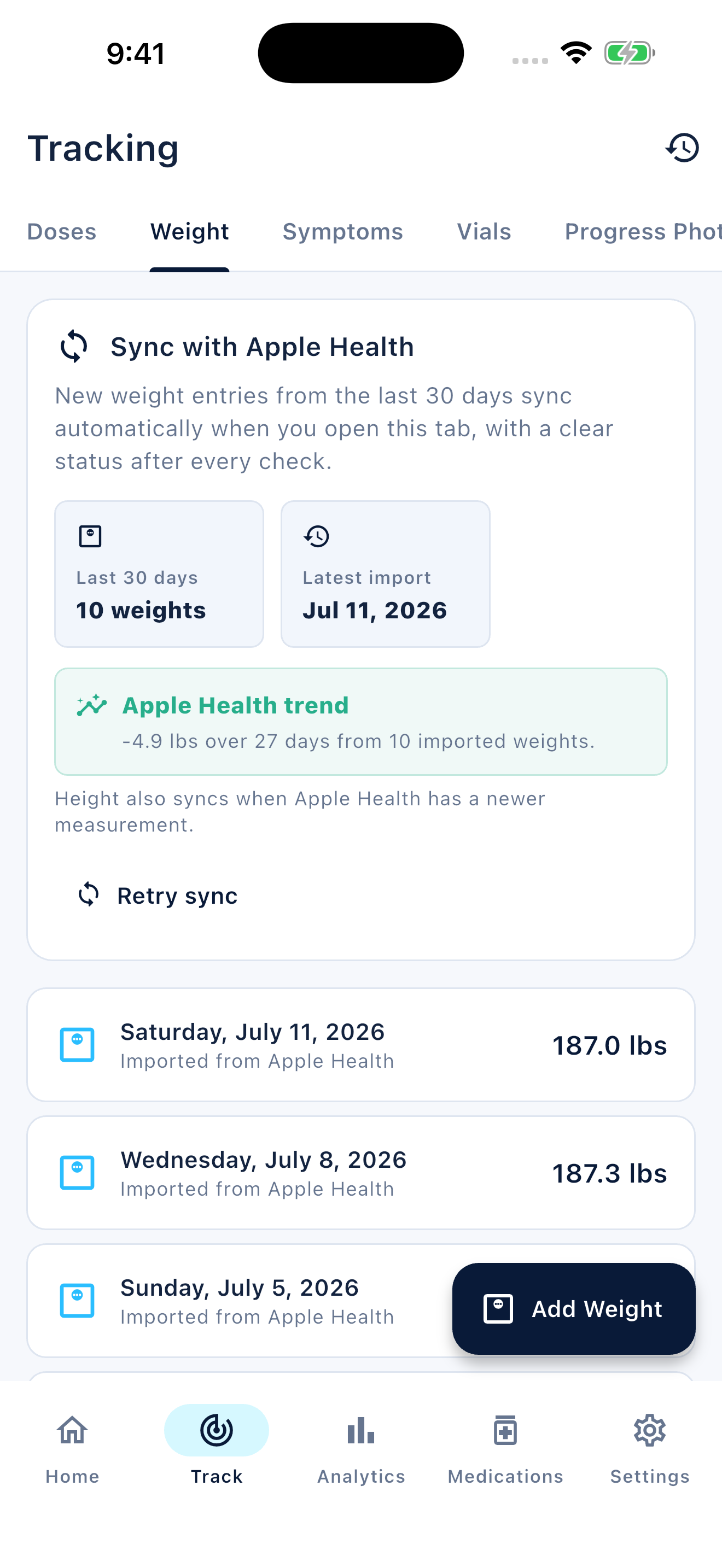
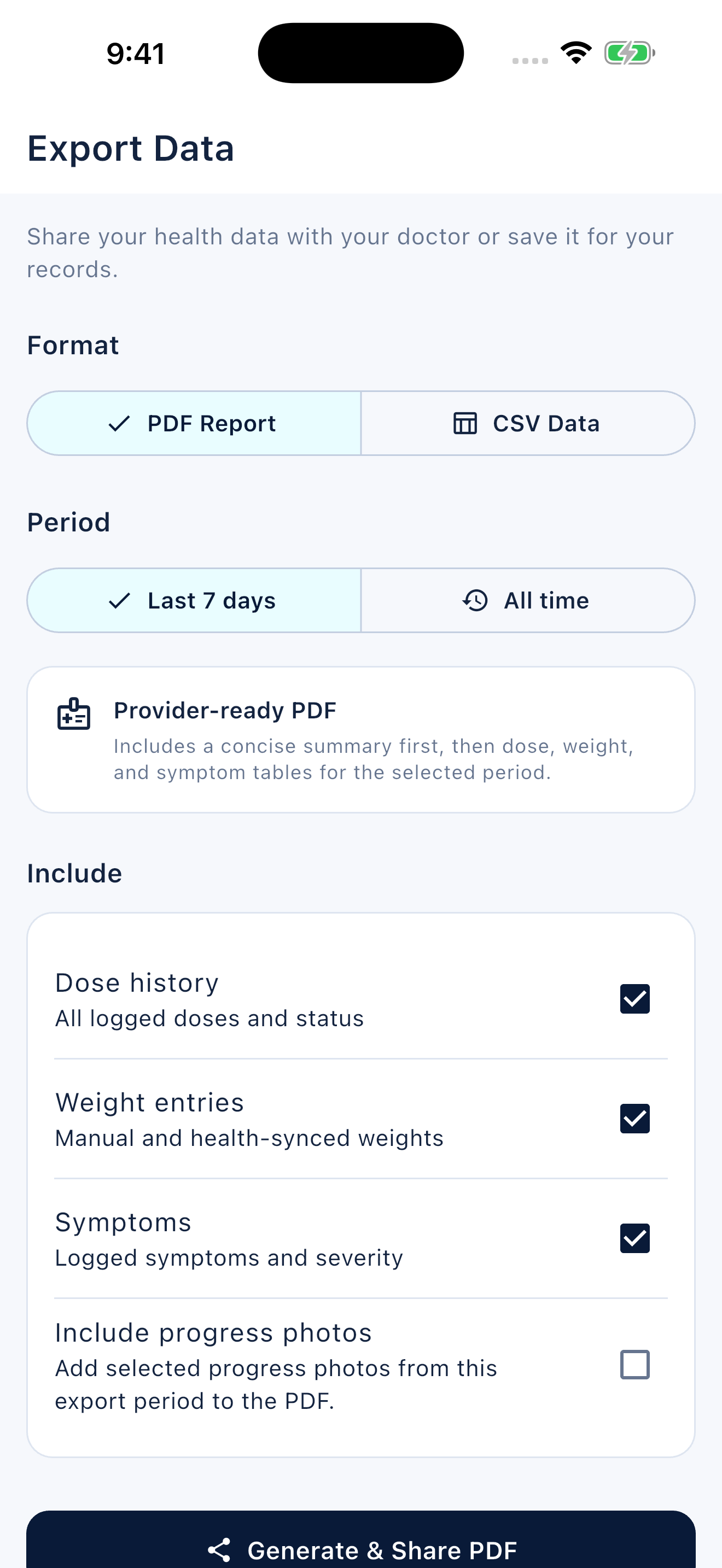
Describe the pattern precisely and take the concern seriously without diagnosing it. The chart supplies dates and values, not a treatment verdict.
FAQ
Common questions
This article provides no diagnostic duration or threshold. Describe the dates and values and ask your clinician what the pattern means for your circumstances.
No. A personal weight chart cannot establish treatment effectiveness or its cause. It should not be used to make medication changes.
Keep the original reading and label the different scale. Explain the measurement difference rather than silently removing a value that complicates the picture.
