
Peptiva guide
GLP-1 Hunger Log: A Seven-Day Example Without Efficacy Claims
Use a consistent personal hunger rating with brief context, a seven-entry example and clear limits on interpreting appetite or changing medication.
Educational only. Not medical advice.
Choose a consistent observation point, write a short hunger rating and add only context you want to remember. Review the seven entries together without treating a high or low number as a success, failure or measure of medication effectiveness. Missing observations should remain missing, not become zeroes.
- Say whether the rating describes a moment or the whole day.
- Keep the scale meaning consistent across entries.
- Record questions separately from interpretations about medication.
The purpose is a readable personal week, not a food rule or a test of willpower. MedlinePlus provides medication-specific information for semaglutide, but it does not validate this example as a clinical hunger assessment. Use your care team's guidance for treatment questions and any concerning change in how you feel.
Define what one entry means
A rating made before dinner is not the same observation as a summary of the whole day. Choose the meaning you can maintain and note when it changes. If a number is useful, keep its endpoints stable. Plain language such as little hunger or strong hunger can accompany the rating without turning it into a prescription.
In the example, the person rates hunger before the evening meal from 0, no hunger, to 10, extreme hunger. Those endpoints describe the person's experience only. The values are invented and are not expected results for any medicine, injection day or stage of treatment.
| Day | Rating and observation time | Brief context |
|---|---|---|
| Monday | 5/10; 6:30 pm | Before dinner; lunch at usual time |
| Tuesday | 7/10; 7:15 pm | Before dinner; late work meeting |
| Wednesday | 4/10; 6:20 pm | Before dinner; note written at the time |
| Thursday | 6/10; 6:40 pm | Before dinner; felt tired |
| Friday | 5/10; 8 pm | Before dinner; travel evening |
| Saturday | 3/10; 6 pm | Before dinner; lunch later than usual |
| Sunday | 6/10; 6:30 pm | Before dinner; question prepared for next visit |
Review timing before looking for a pattern
This week contains different meal times and two clearly unusual evenings. The defensible summary is that ratings were recorded before dinner, with context noted on several days. It is not that late meetings caused hunger or that a particular rating proves medication action.
Keep hunger and thoughts about food distinct when you record both. Do not add them into a homemade clinical score. If an entry was written from memory the next morning, label it retrospective. If you miss a day in your own week, describe the gap rather than copying the previous day's number.
Use the week to ask a focused question
A useful question might be: Would you prefer a whole-day appetite description or notes at a specific time? Another is: What should I record if a change in appetite concerns me? Bring the original entries so the clinician can see the observation method, not just an average.
Do not change medication timing or dose to obtain a preferred hunger score. Do not use a low number to decide to skip meals or a high number to label the day a failure. If you have a concern that needs attention, contact your care team without waiting for a complete seven-day set.
Inside the app
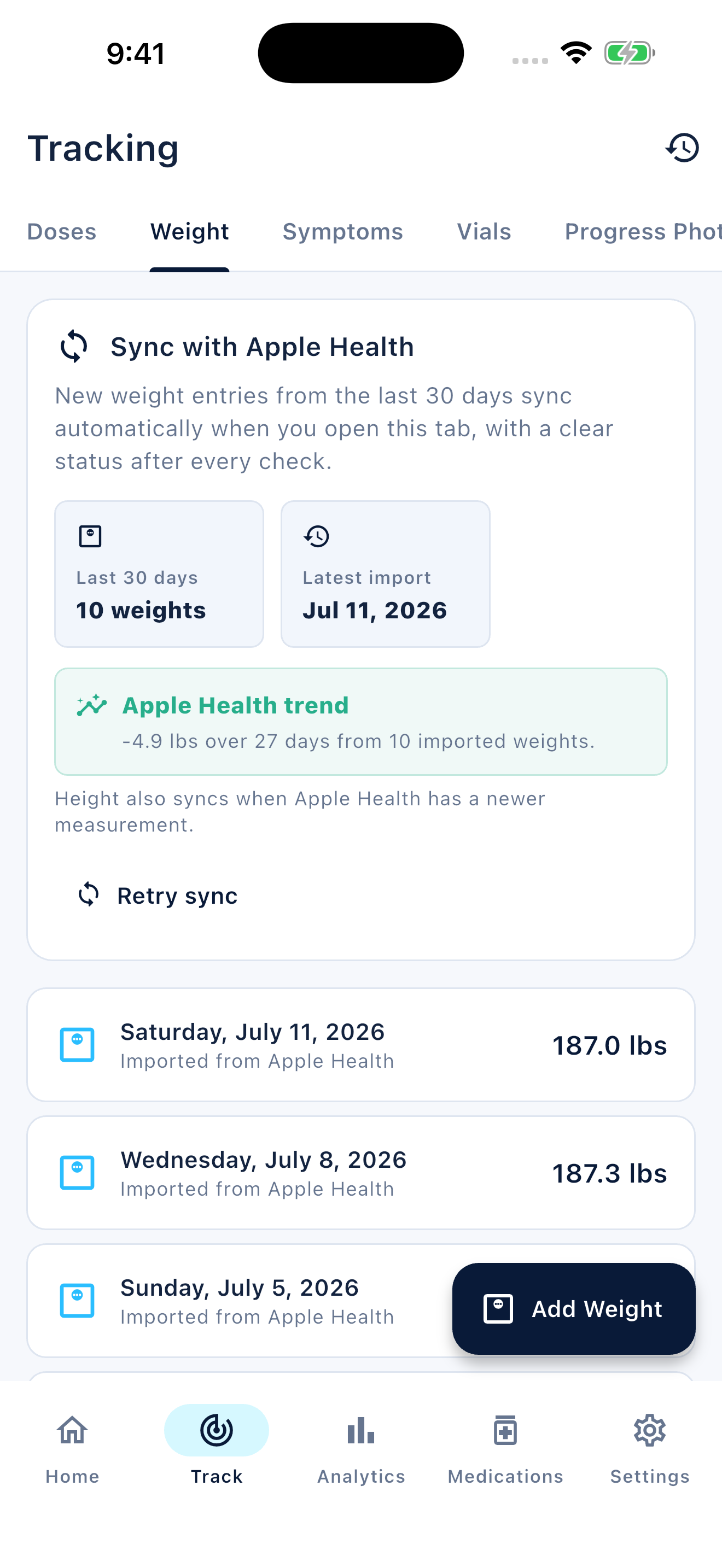
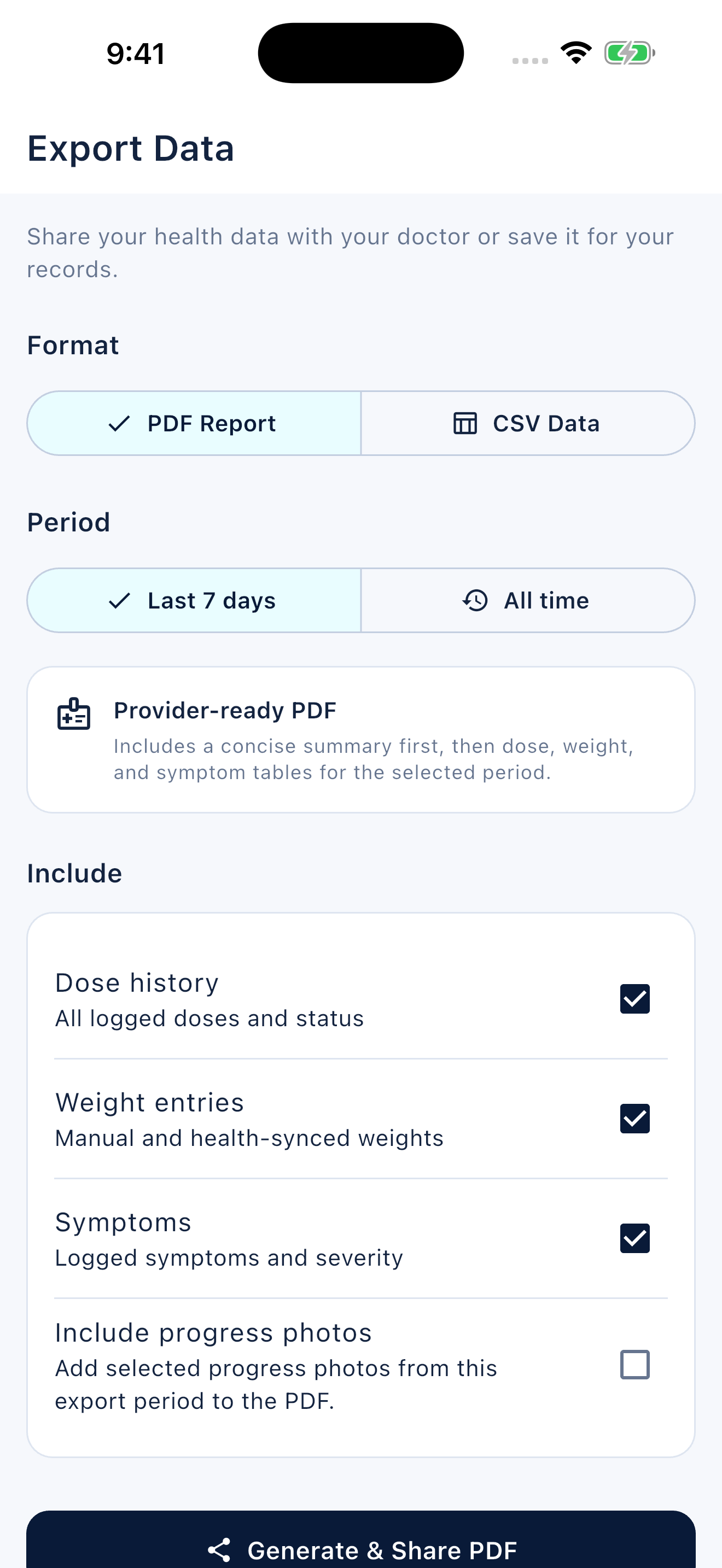
Peptiva's daily check-in includes optional hunger and food-noise ratings, and its analytics can display appetite trends. Use these as subjective records. The table's observation times and contextual explanations are manual notes, not a promise of additional dedicated fields.
Free download with optional in-app purchases. See your store for current prices, subscriptions and terms.
A useful hunger week preserves the meaning of each entry. It helps explain your experience without claiming to measure treatment success.
FAQ
Common questions
A personal hunger entry cannot establish drug levels or effectiveness. Record the observation and ask your clinician about concerns rather than changing medication from the rating.
Treat it as a subjective personal rating, not a validated diagnostic or triage instrument. It has no threshold here for changing treatment or deciding care can wait.
No. Missing and no hunger are different. Leave the missing observation unrecorded and explain the gap in a note if relevant.
