
Payooo guide
A Debt Payoff Plan for Irregular Income: Low, Middle and High Months
Compare three fictitious income months, reserve essential costs and required payments, and decide on an extra only after income is received.
Payooo is for planning and tracking. It is not financial advice.
For irregular income, keep required payments visible and treat extra payments as adjustable scenarios. Decide what is available after money arrives, business and tax set-asides are handled where relevant, and the household's next obligations are covered.
- Distinguish invoiced, expected and collected income in your own records.
- List essential costs and required debt payments before optional extra.
- Test a low, middle and high received-income month.
- Revisit timing when a customer payment is delayed.
Freelancing, commissions and seasonal work can change both the amount and arrival date of income. A monthly average hides that uncertainty. This guide addresses variable receipts; use the budget-calendar guide for allocating money across known paydays.
Define income that is actually available
Start with received money that can be used for household spending. Gross business revenue is not automatically personal cash: necessary business costs and appropriate tax provisions may come first. Their treatment depends on your situation and local rules, which this example does not calculate.
Look at several past months for context, but do not assume the weakest observed month is a guaranteed floor. If expected receipts fail to arrive, the amount available may be lower still. Record the next decision date alongside each uncertain receipt.
Example: three collected-income scenarios
In this fictitious USD example, Sam's figures are household-available cash after business and tax set-asides. Essential costs are $1,700, debt minimums total $300, and Sam chooses to retain $200. These assumptions illustrate the arithmetic, not recommended spending levels.
- The remainder is an upper planning amount before any omitted commitments, not an instruction to pay it all.
- A high month does not make $1,100 a recurring commitment.
- If only $1,900 arrives, essentials plus minimums alone leave a $100 shortfall.
| Scenario | Available income USD | Essentials + minimums + retained cash | Remainder for a possible extra |
|---|---|---|---|
| Low month | 2,200 | 1,700 + 300 + 200 | 0 |
| Middle month | 2,650 | 1,700 + 300 + 200 | 450 |
| High month | 3,300 | 1,700 + 300 + 200 | 1,100 |
Choose a scenario after the receipt clears
Suppose Sam expected the high month, but only $2,200 has arrived when the payment decision is due. The low-month scenario applies to current cash; an unpaid invoice does not justify the $1,100 extra. Reassess when the remaining receipt actually arrives.
Check the cash-flow calendar as well as the total. Income received after a due date cannot fund an earlier payment without other available money. The CFPB cash-flow worksheet is useful for making those week-by-week gaps visible.
Do not hide an inadequate baseline
If the lower scenario cannot cover essentials and required payments, reducing optional extra to zero does not solve the shortfall. Review the obligations and seek help promptly. For credit-card difficulty, the CFPB recommends contacting the issuer rather than waiting until the plan fails.
Record which scenario you actually used and why. Over several months, this history can show whether the plan needs a lower recurring assumption or a different response to delayed receipts. Estimated finish dates will change with those inputs.
Inside the app
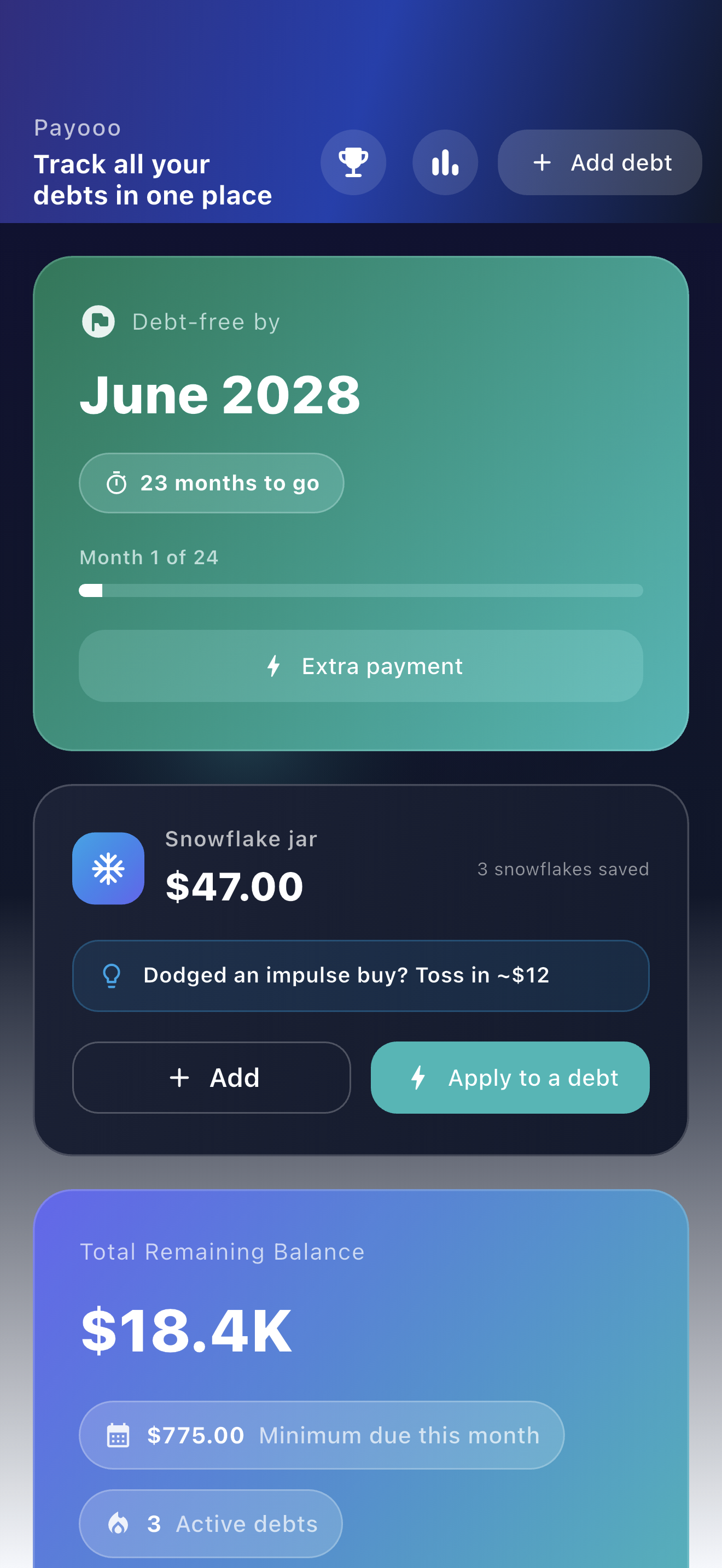
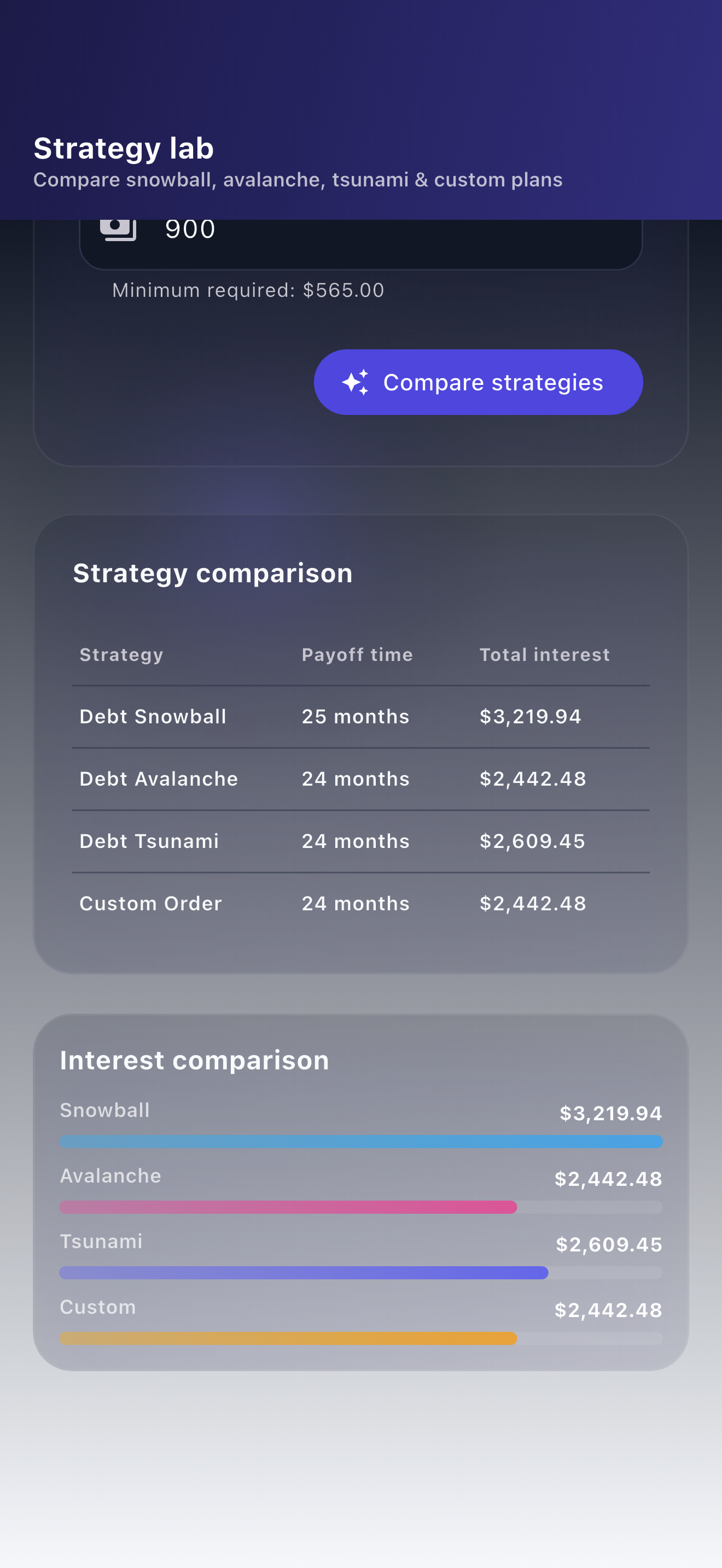
Payooo can compare manually entered extra-payment scenarios while keeping debts and due dates together. It does not import freelance invoices or predict customer payments. Keep the income ledger in your budgeting system and enter only the debt assumptions you intend to test.
Free download with optional in-app purchases. See your store for current prices, subscriptions and terms.
A variable extra is consistent with variable income. Make the next decision from available cash, and treat an uncovered required payment as a real issue rather than a disappointing scenario.
FAQ
Common questions
A best month can overstate repeatable cash. Compare a lower month and the timing of actual receipts, then adjust extra payments after essential obligations and required payments are accounted for.
They can be recorded as expected income, but not as cash already available. Keep the receipt date uncertain until the money arrives and can be used.
No. Irregular income changes in amount or arrival date. A regular two-week paycheck has a recurring cadence. This guide focuses on uncertain receipts, not a fixed-payroll calendar.
