Coleo guide
Kids' Equipment and Uniform Expense Tracker: Bought, Borrowed, and Needed
Use a filled equipment list to separate required purchases, borrowed items, returns, estimates, and actual costs without inventing inventory features.
Maintain an equipment checklist alongside actual expense records. The checklist answers what is required, owned, borrowed, or still needed; the expense record answers what was purchased and paid. They overlap, but a borrowed instrument or reused uniform should not become a fictitious purchase.
- Check the current provider requirement before buying.
- Record borrowed items even when the purchase cost is zero.
- Keep size and return information in notes or a separate worksheet.
Equipment planning is about availability as well as money. A uniform may already be owned but no longer fit, while a borrowed instrument may need returning before the final lesson. The example distinguishes those problems instead of reducing everything to a spending total.
Verify the requirement and the item's condition
Start with the provider's current equipment list and ask which specifications are mandatory. A recommended branded bag is not automatically a registration requirement. For protective or specialist equipment, follow the provider's and manufacturer's suitability guidance rather than assuming a reused item is appropriate.
Check what you already have with the child present when fit matters. Record the date checked, size if useful, and any unanswered requirement. These are practical notes for the family, not a safety certification or a reason to buy a replacement on a fixed schedule.
Example: a kit list with three different next actions
This fictitious USD example covers Maya's team kit and Leo's music equipment. The borrowed instrument has no purchase price; it still has a return obligation. All providers and arrangements are invented.
- Confirmed new spending so far is USD 28.
- The required workbook would bring planned new spending to USD 46 if the estimate holds.
- The optional photo would add USD 12 only if the family chooses it.
| Child and item | Requirement and state | Cost record | Detail and next action |
|---|---|---|---|
| Maya: team shirt | Required; bought | USD 28 paid | Size M; receipt KIT-01; check before first match |
| Maya: practice shoes | Required; already owned | No new purchase | Fit checked this week; confirm provider specification |
| Leo: practice violin | Required; borrowed | No purchase payment | School instrument; return after local term ends |
| Leo: music workbook | Required; still needed | USD 18 estimate | Ask teacher which edition before ordering |
| Maya: team photo | Optional; undecided | USD 12 quote | Decide after viewing order terms |
Record purchases and close borrowing obligations separately
After a purchase, write the actual amount and date, attach or reference its receipt, and mark the checklist item obtained. Keep an old estimate only in the planning history. The CFPB spending tracker supports this receipt-based approach to actual spending.
For a return, obtain confirmation from the owner and retain a short dated reference. If a deposit was paid, distinguish equipment returned from deposit refunded. At the end of the local term or season, mark items available for reuse, awaiting inspection, or still due back without assuming a universal seasonal month.
Inside the app
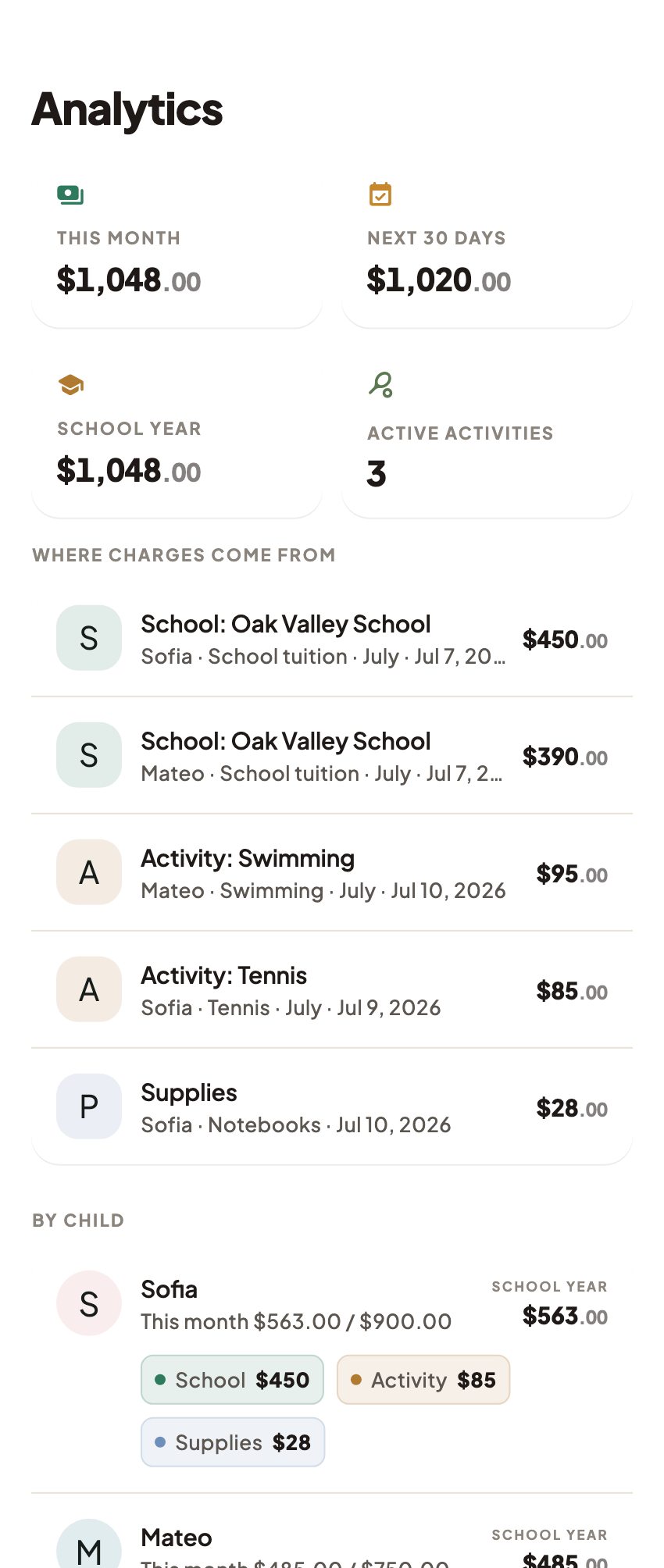
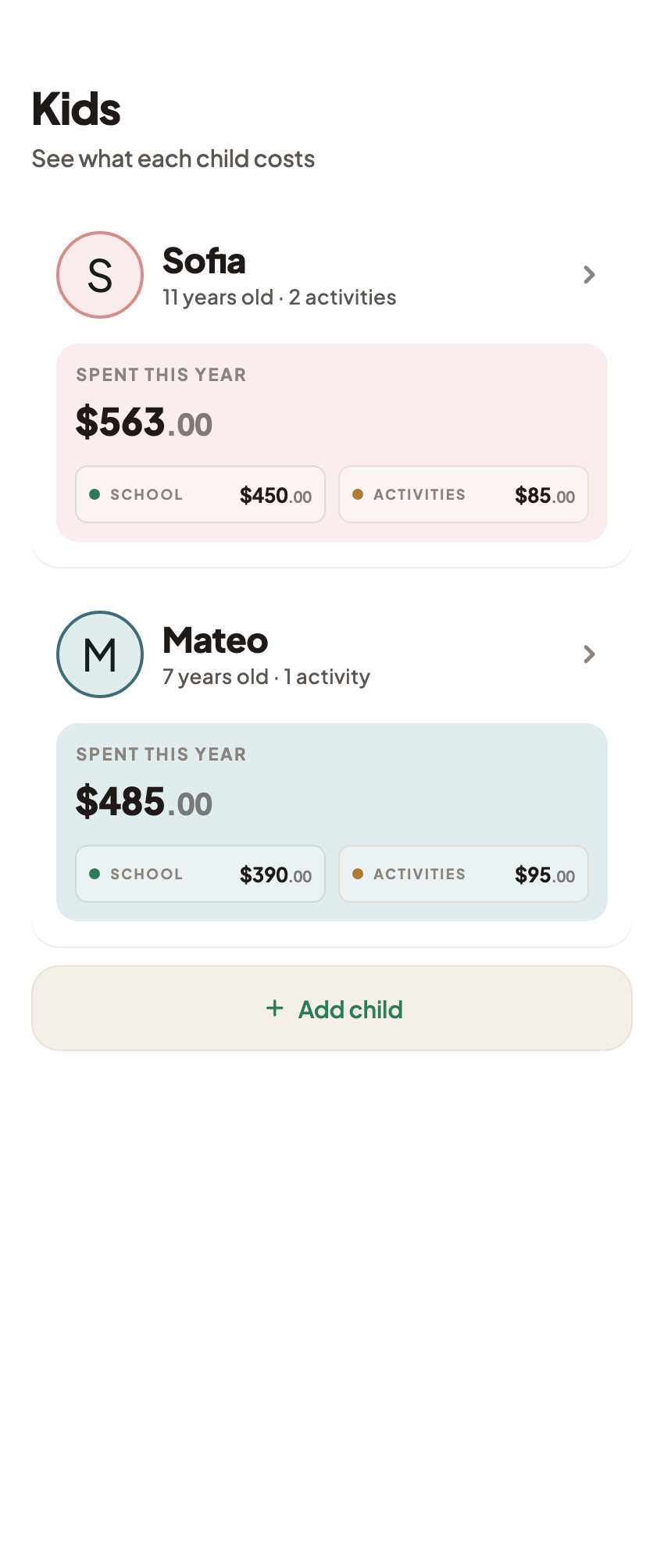
Coleo supports expense descriptions, notes, payment methods, dates, and receipt photos. Use the relevant expense note for details about a purchased item. Unpurchased and borrowed equipment can remain in the separate checklist; Coleo is not a stockroom, rental-management, or equipment-safety system.
Free download with optional in-app purchases. See your store for current prices, subscriptions and terms.
Close each item with the right action: buy the confirmed requirement, check the owned item, or return the borrowed one. A complete kit is not the same thing as a large expense total.
FAQ
Common questions
The verified expense flow has a description, amount, date, notes, and receipt photo. Treat size, condition, owner, and return date as worksheet details or relevant expense notes, not a dedicated inventory module.
Keep it in the equipment checklist with its owner, condition, and agreed return date. Do not invent a purchase just to create an expense entry.
Track the cash paid separately from the item price and record any later return of the deposit only when confirmed. A deposit is not a guaranteed refund.
