
Payooo guide
A Weekly Debt Payoff Check-In: Your Next Seven Days
Use a filled seven-day agenda to check upcoming payments, confirm a posted amount and leave unchanged accounts alone until the monthly review.
Payooo is for planning and tracking. It is not financial advice.
Review the next seven days, check only what changed and finish with a dated next action. The weekly check-in is for near-term execution. It should not require rebuilding a payoff projection or reconciling every historical transaction.
- Scan through the day before your next review.
- Check required amounts against the latest available statement.
- Verify submitted payments without recording duplicates.
- Carry unresolved questions forward with an owner and date.
The CFPB bill-calendar guidance recommends keeping a calendar where you can check it weekly. The agenda below makes that habit concrete. It is separate from the monthly close, which explains balance movements and sets a new statement-based baseline.
Start with upcoming obligations, not the total debt
Open your due-date register and identify payments due before the next check-in. Confirm that the intended payment method has enough available cash and enough processing time under the creditor's instructions. A funded monthly budget can still have a timing problem this week.
Review a promotion only if its deadline or terms now require action. Do not turn every rate notice into an automatic strategy change. Mark unclear information for follow-up and leave verified, unchanged account details alone.
Example: a filled seven-day agenda
This fictitious USD example covers September 7 through 13. Card Home requires $45 on September 10. Card Travel has a $35 payment already submitted, and a $25 optional extra is under consideration. Amounts are not recommendations or Payooo app data.
- Changed this week: one $35 payment can enter verified history.
- Unchanged this week: APRs and the selected payoff order.
- Still open: whether the optional $25 fits after weekend essentials.
| Day | Agenda | What counts as done |
|---|---|---|
| September 7 | Check $45 Card Home obligation | Statement and funding checked |
| September 8 | Submit Card Home payment | Retain submission evidence |
| September 9 | Check earlier $35 Card Travel payment | Creditor receipt verified before recording |
| September 10 | Card Home due date | Verify creditor receipt; follow up if unclear |
| September 11 | Recheck cash before optional $25 | Keep extra as a scenario until feasible |
| September 12 | No new obligation | No duplicate payment entry |
| September 13 | Leave next-review note | Next check-in set for September 14 |
Keep payment evidence separate from reminders
A reminder means look at this account. A bank submission receipt means an instruction was sent. Creditor confirmation is the evidence used here before recording a completed payment. These distinctions belong in your review notes; they are not automatic bank-connected Payooo states.
If a due payment is still unclear, check the issuer portal or contact the issuer. Do not wait for the next weekly review when a deadline needs attention now. Save enough evidence to explain the amount and date without storing unnecessary account identifiers.
End with a handoff to the monthly review
Write a short next-action note: review the optional $25 after essential spending is known, and check the next due account on September 14. If no extra fits, leave it at zero instead of changing a confirmed payment record.
When the statement period closes, move to the monthly reconciliation guide. That is where posted interest, purchases and payments explain the closing balance. Keeping the weekly task small leaves space for immediate exceptions without duplicating the full monthly process.
Inside the app
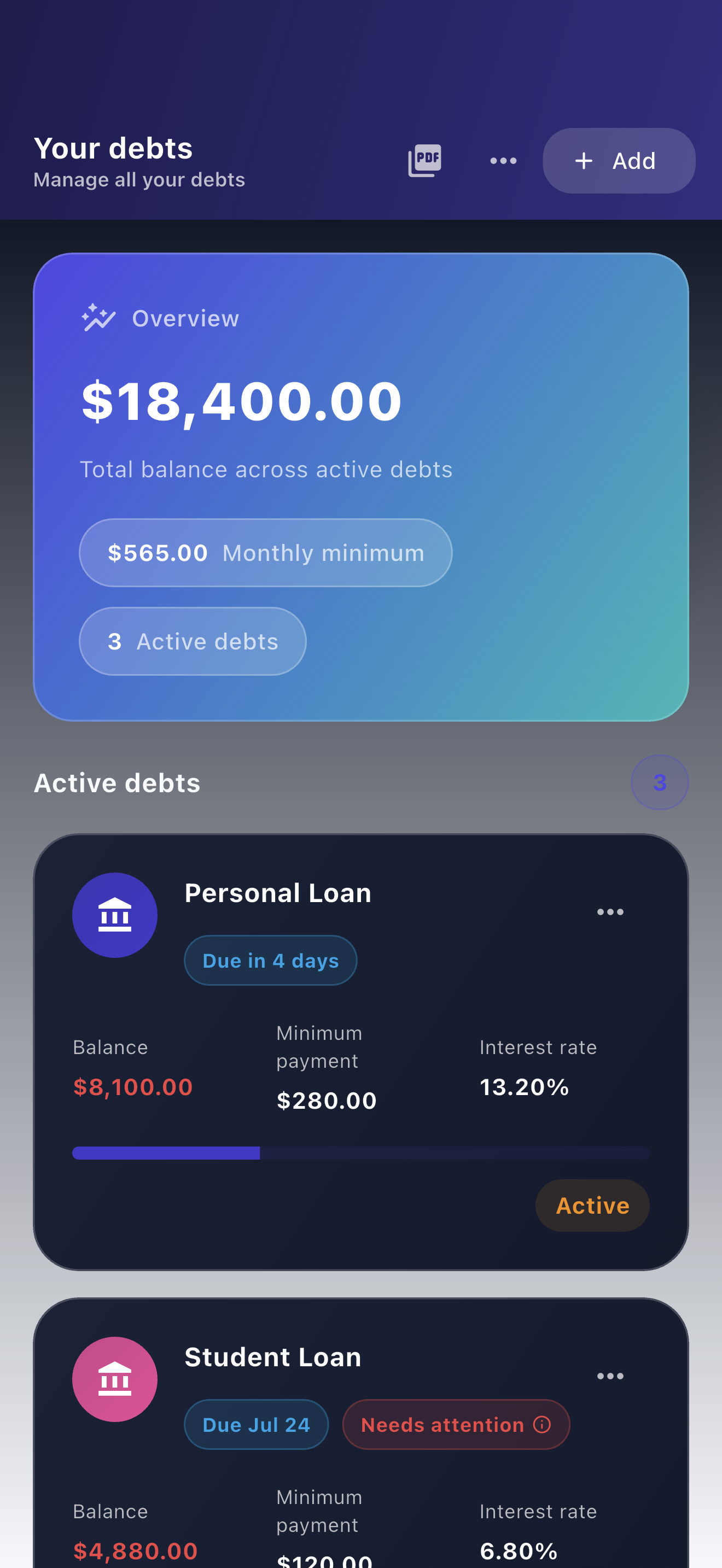
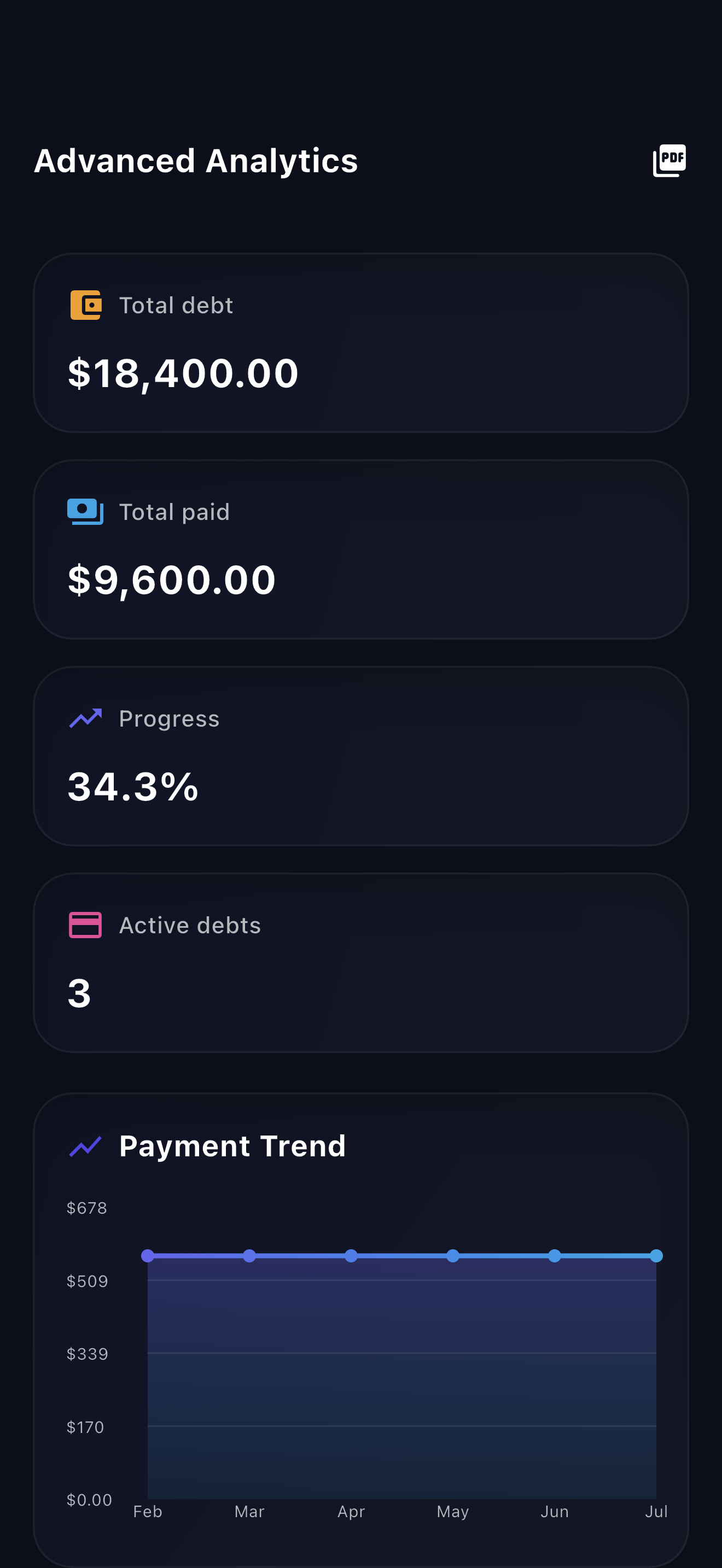
Payooo can hold manually entered debts, reminders and payment history for this check-in. Its overview helps you return to the same plan, but payment confirmation and available cash still need checking with the creditor and your own budget.
Free download with optional in-app purchases. See your store for current prices, subscriptions and terms.
A successful weekly review leaves fewer unknowns about the next seven days. It does not need to produce a new payoff strategy or a lower balance every time.
FAQ
Common questions
No. Focus on deadlines and facts that changed. Reconcile complete statement periods during the monthly review unless an urgent discrepancy needs attention sooner.
A list of upcoming required payments, any unresolved confirmation or funding issue, and one next action with a date. An unchanged account does not need a new entry.
Keep it as a scenario or note until you have evidence it occurred. A planning entry is not confirmation that a creditor received money.
